What It Costs
We're not going to throw a number at you that doesn't mean anything until a panel's in front of us. Panel replacement cost depends on whether your door is a steel sectional from the 80s or an older wood-panel door from a house built closer to 1948 - and whether we can still get a matching panel at all.
Discontinued panel dimensions
A lot of the housing stock through this area went up between 1938 and 1989, with the median landing around 1948, so older doors often came with panel styles and dimensions that current manufacturers don't carry.
Full replacement when unmatched
When we can't match a discontinued panel, the honest answer is a full door replacement instead of a patch job, and we'll tell you that up front rather than order a part that won't fit right.
Damage scope assessment
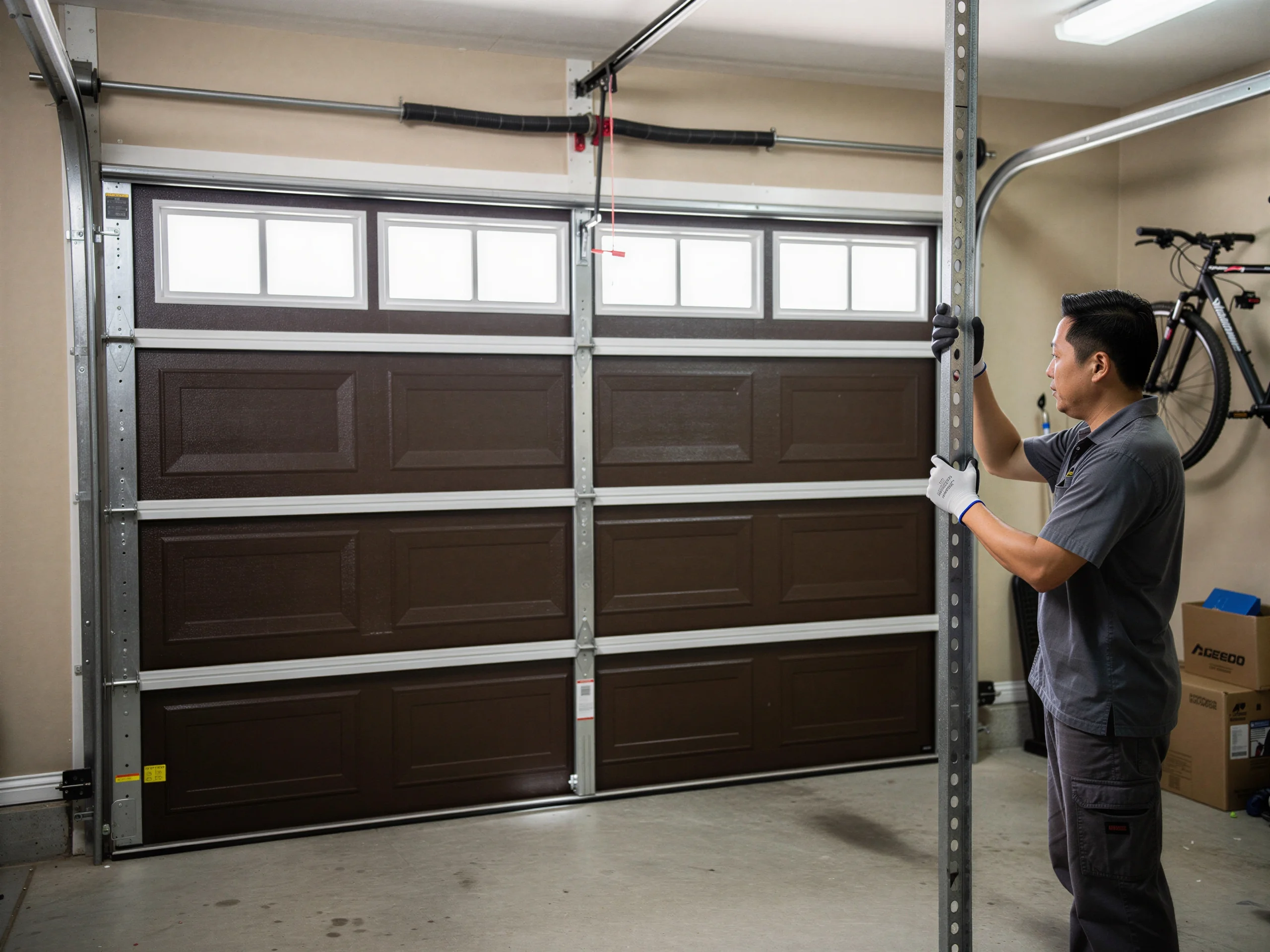
What we can do is give you a real number once we've looked at the door, the track spacing, and whether the damage is one panel or has already started pulling the hinges and rollers out of line. That's the only estimate worth trusting.
How Long You Are Without the Door
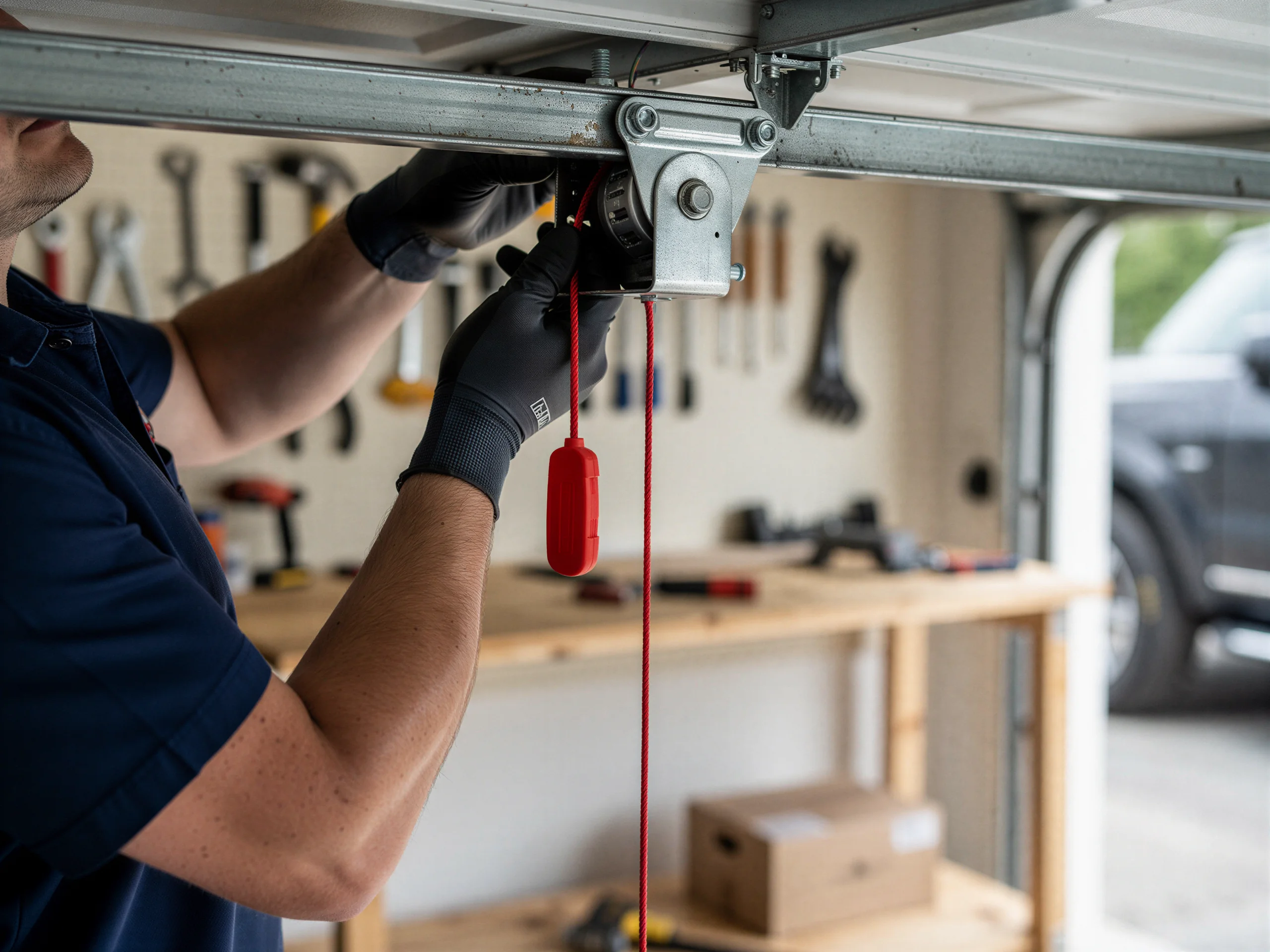
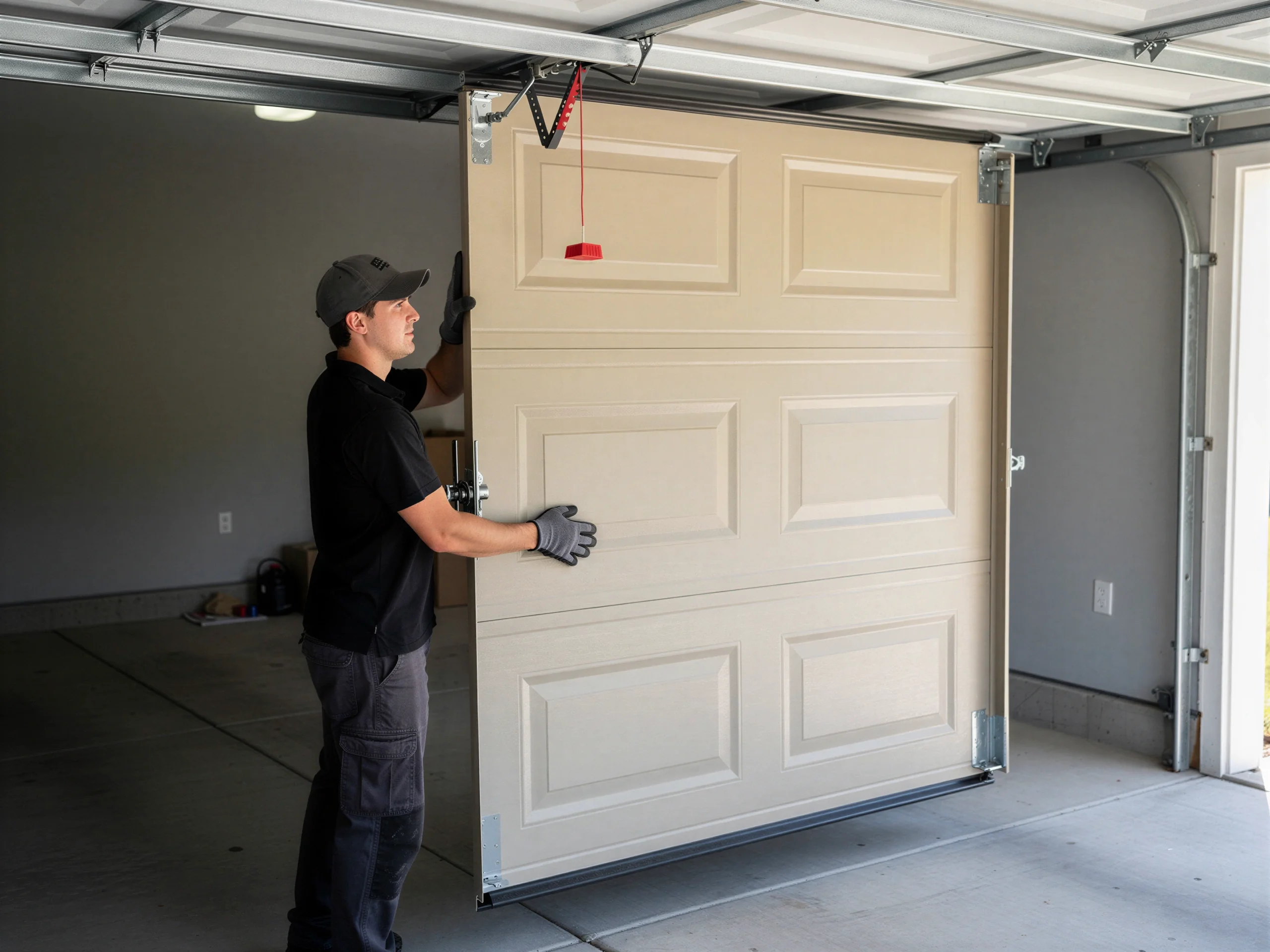
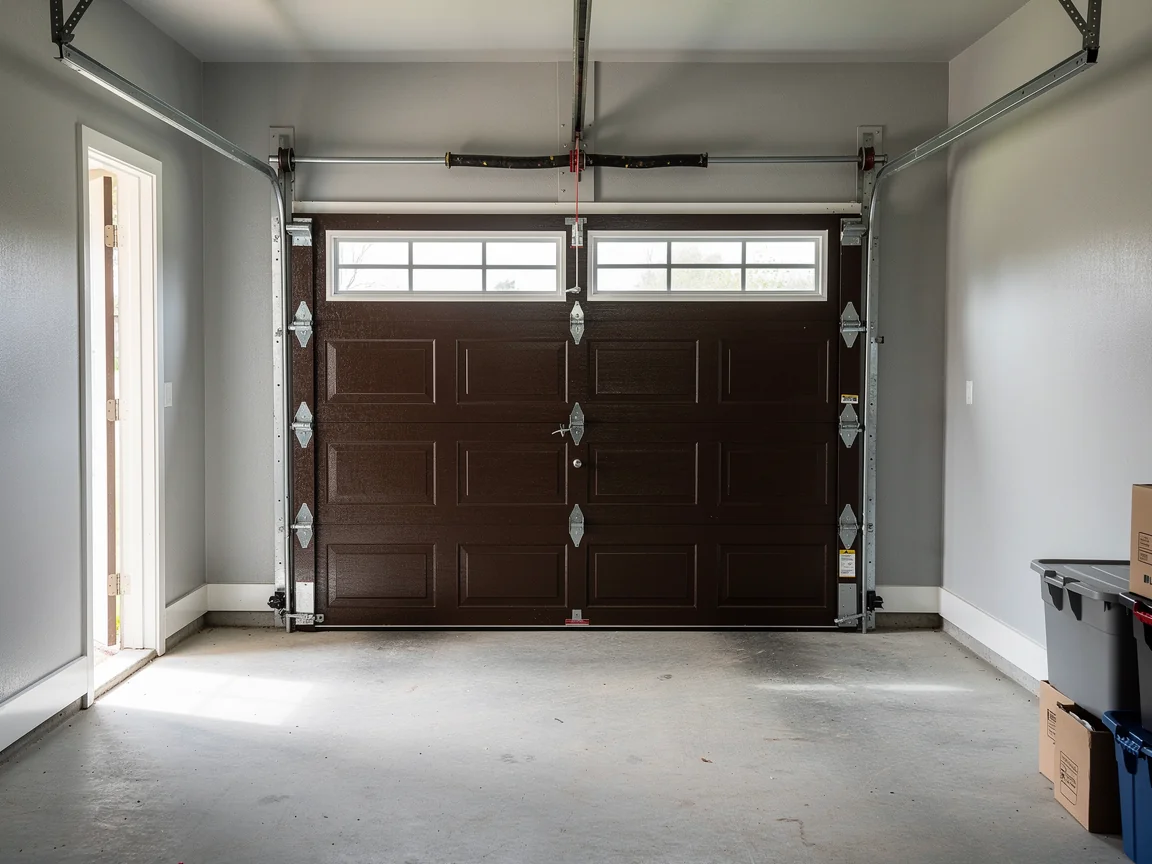
A single damaged panel on a sectional door doesn't usually mean the door is unusable while you wait - we can often secure it shut or brace it so the opener still runs safely. Full replacement timing depends on parts availability, and that's the part we can't promise on a page like this: matching panels for older doors sometimes have to be special-ordered, and discontinued styles can mean a longer wait than a stock steel panel. If your house falls into that large pre-1960 share of the area's housing, budget extra time for sourcing rather than the install itself, which is usually the fast part. We'd rather tell you a part is backordered than guess at a date and miss it.
What Causes It Around Here
Cold is the big one. This area sits in a severe cold climate band, and steel panels contract and flex through repeated freeze-thaw cycles in a way that fiberglass and wood panels from the same era don't handle the same way.
Why pre-1960 panels fail
On a lot of the pre-1960 doors still in service across the 34 named areas in this region, the panel material and the hardware it's riding on were never designed for the number of freeze-thaw cycles they've now been through.
Salt and snowmelt damage
That shows up as hairline cracks along panel seams, warping at the bottom panel where road salt and snowmelt sit against the steel, and rust-through on older galvanized sections that were never fully sealed.
Driveway impacts on brittle doors
Add in driveway accidents - a bumper tap, a ladder leaned the wrong way - and panel damage on a door that's already brittle from decades of cold cycling tends to spread faster than it would on a newer door in a milder climate.
How It Shows Up
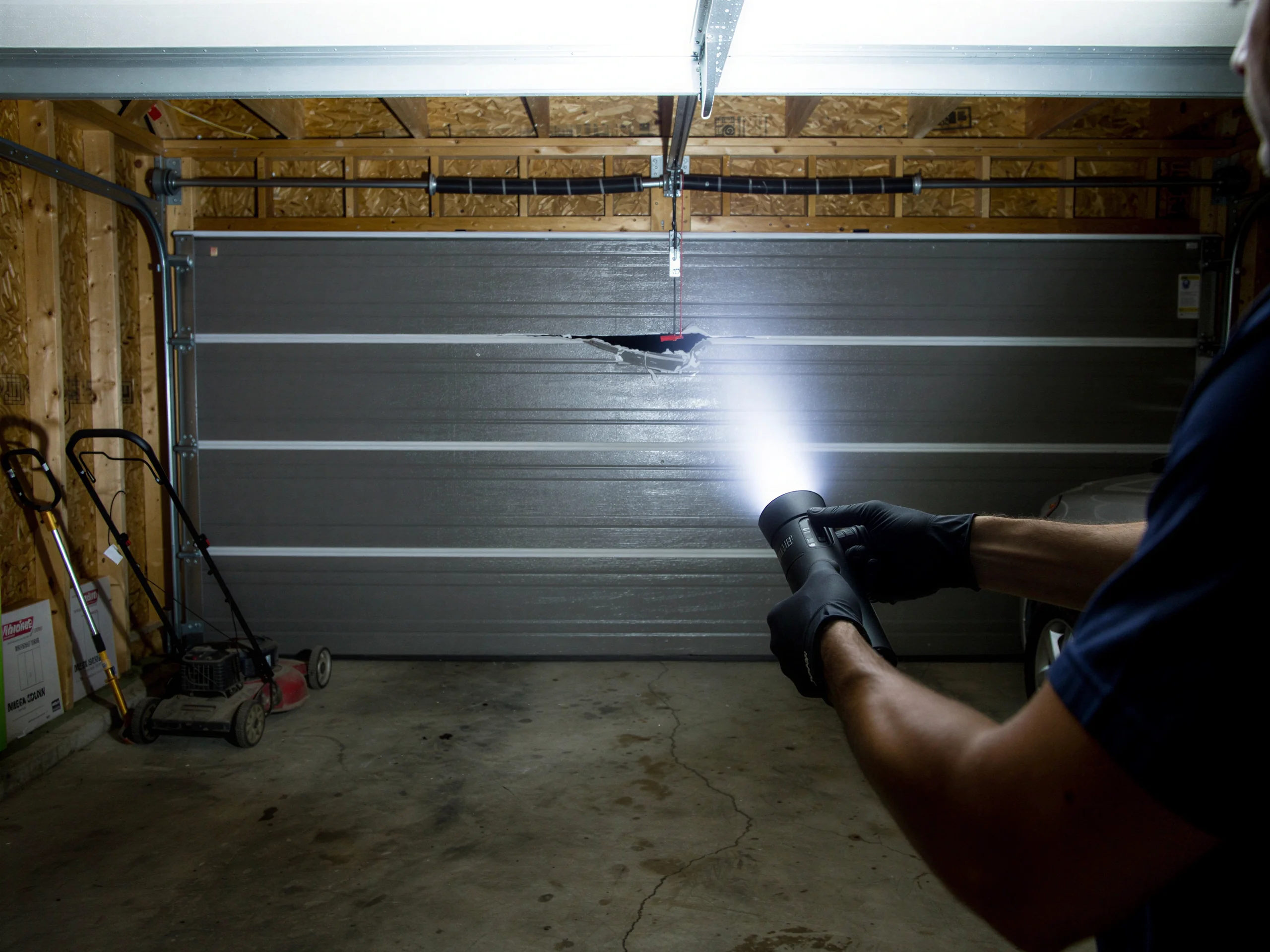
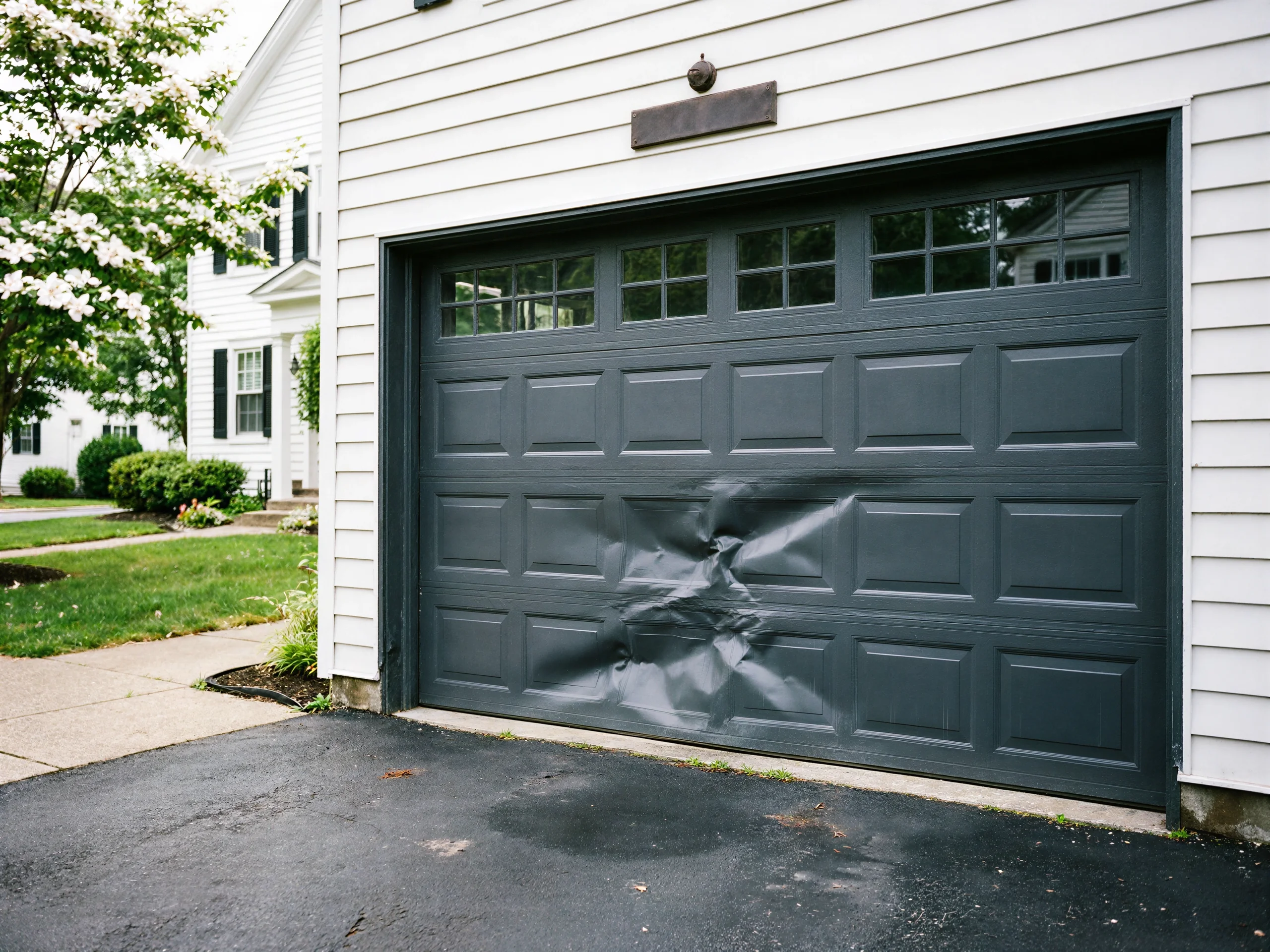
Usually it starts small: a dent from a car mirror or a basketball, a crack along a seam that wasn't there last fall, or a bottom panel that's gone soft and bowed from sitting in slush all winter. On older doors - the ones built when this area's housing stock was going up between 1938 and 1989 - a cracked panel often means the whole section has lost its rigidity, and the door starts binding in the track or putting extra strain on the opener. If you're noticing the door shudder partway through its cycle, or daylight showing through a seam that used to be flush, that's panel failure, not opener trouble, even though people often call us about the opener first. Catching it at one panel is cheaper and faster than waiting until the track or rollers are pulled out of alignment too.
Talk to a local pro
Garage door service in Utica?
Same-day service with honest, upfront quotes.