
 Buying a Replacement Door Here: What the House and the Winters Decide
Utica's housing stock runs 1938-1989 with a 1948 median build year, and the cold climate band here changes what a new garage door needs to do.
BlogUtica, NY · 4 min read
Why a Door Goes Off Track Around Here
Utica's housing stock runs 1938-1989 with a 1948 median build year. Here's why that age, plus the severe cold here, is what actually knocks doors off track.
Local detail
What It Costs
We're not going to put a number here, because we don't have one that would mean anything until we see the door. A track that's bent an inch off plumb is a bracket job. A track that's pulled away from the jamb because the wood behind it has been working loose since the house was built in the 1940s or 50s is a different repair, sometimes with carpentry involved before the door hardware part even starts. Given that most of the housing stock in this area dates to 1938-1989 with a median build year of 1948, the second kind of job shows up more than you'd think. The honest answer is that pricing a track repair over the phone, before anyone's looked at the jamb, the rollers, and how the door is actually hanging, is a guess dressed up as a quote. What we can tell you is that the age of the house is usually a better predictor of what's wrong than anything the homeowner describes on the call.We'll give you a real number once we're standing in front of it.
The area
The Situation
A door doesn't jump the track on its own. Something lets it. In a service area where most homes were built between 1938 and 1989, and a lot of that stock is original one-piece or early sectional hardware, the usual culprit is a track bracket that's been riding on the same lag screws for sixty-plus years. Wood shrinks and swells with every season, the screw hole gets a little bigger each time, and eventually the bracket has enough play that a hard stop or a slightly bent roller is all it takes to pull the track loose at the wall. Across the 34 named communities in this service area, that pre-1960 pattern repeats house after house, it isn't one neighborhood's problem. The other common version is a cable that's jumped its drum because a roller seized up and dragged instead of rolling, which torques the whole door sideways. Both start small. A door that wobbles for a few weeks before it finally comes off the track almost always gave a warning first, usually a scrape or a thud that got written off as normal.
What we find
What to Look At First
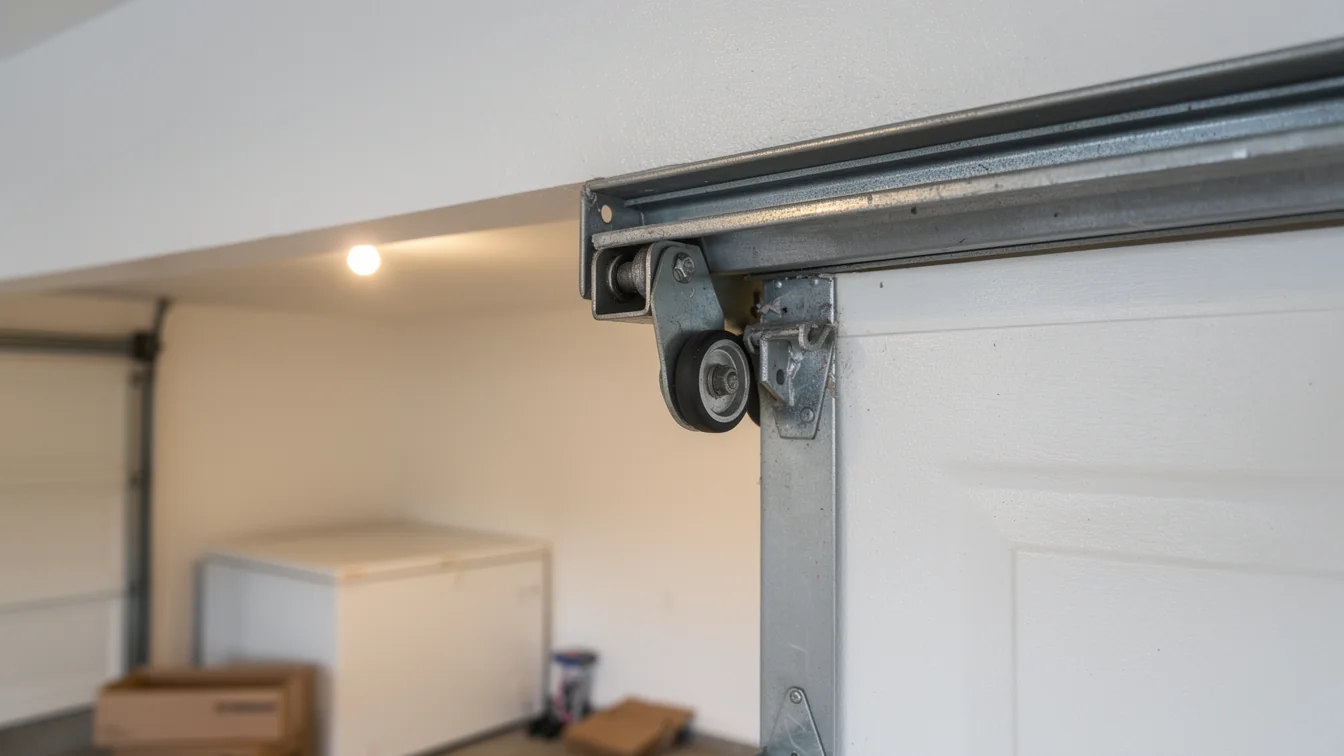
Before you call anyone, open the door partway and look at the track where it bolts to the wall studs, not the track itself. On houses from this era, that's where the failure usually starts, not in the track metal. Check for a gap between the bracket and the jamb, or screws that look backed out even slightly. Next, run your hand along the bottom two rollers on each side, the ones that take the most weight. If one feels rough or doesn't spin freely, that's your early warning, not the track. Look at the cable where it wraps the bottom bracket for fraying, a few broken strands there is a different repair than a track problem and a more urgent one. We'd rather you stop the door and call than keep opening it once you've seen any of this, a door that's partway off its track can come down the rest of the way under its own weight. One thing we won't do is tell you to keep using a door that's already showing a gap at the bracket, that's past the point where this is a tightening job.
How we work
What the Weather Here Does to It
This area sits in a severe cold climate band, and that matters more to a garage door than most homeowners expect. It isn't the cold itself that causes trouble, it's the freeze-thaw cycle, ground and framing moving slightly through the winter and settling back in spring. On a newer house that movement is small enough the door doesn't notice. On a house built around the 1948 median for this area, where the jamb has already had decades of that same cycling, it's often the difference between a bracket that's merely loose and one that finally lets go. Cold also stiffens the lubricant in the rollers and hinges, so a roller that was marginal in October can seize up by January, which drags the door sideways on the track instead of rolling straight. That combination, an older bracket plus a stiff roller plus a hard winter stop, is the most common way we see a door actually jump the track here rather than just rattle. Keeping the track hardware tight going into winter does more good here than almost any other single thing.
Questions
Common questions
My door jumped the track once and I pushed it back on. Is that okay?
It can run again, but pushing it back on doesn't fix why it came off. If a bracket pulled loose or a roller seized, those are still there. We'd want to look at the track mount and the rollers before it happens a second time, especially in an older house where the jamb has had decades to loosen.
Is this just an old-house problem, or can newer doors do this too?
Any door can jump a track if a roller fails or something gets knocked loose. It's just more common here because so much of the housing in this area dates to 1938-1989, with brackets and jambs that have had far more freeze-thaw cycles to work against them than a newer build would.
How fast does a loose bracket usually get worse?
It varies, but a gap that shows up in fall often gets noticeably worse by the coldest part of winter, since the freeze-thaw movement is what pushes it the rest of the way. We don't have a set timeline for that, it depends on the house, but we wouldn't leave it once you've seen daylight at the bracket.
Recommendation
You Might Also Like
More garage door guides for Utica homeowners.
Buying a Replacement Door Here: What the House and the Winters Decide
Utica's housing stock runs 1938-1989 with a 1948 median build year, and the cold climate band here changes what a new garage door needs to do.
 What Openers and Power Cuts Really Mean for a Utica Garage Door
Why Utica's pre-1960 housing stock and cold winters make opener failures and power cuts different here, plus what actually drives repair cost in this service area.
 Garage Door Work for Utica's Older Housing Stock
Utica's housing stock dates mostly to 1938-1989, median 1948.
Ready when you are
Need a garage door sorted in Utica?
Utica Garage Door Pros repairs and installs garage doors, springs and openers in Utica, NY and the surrounding area.
Certified Experts
Quality Assured