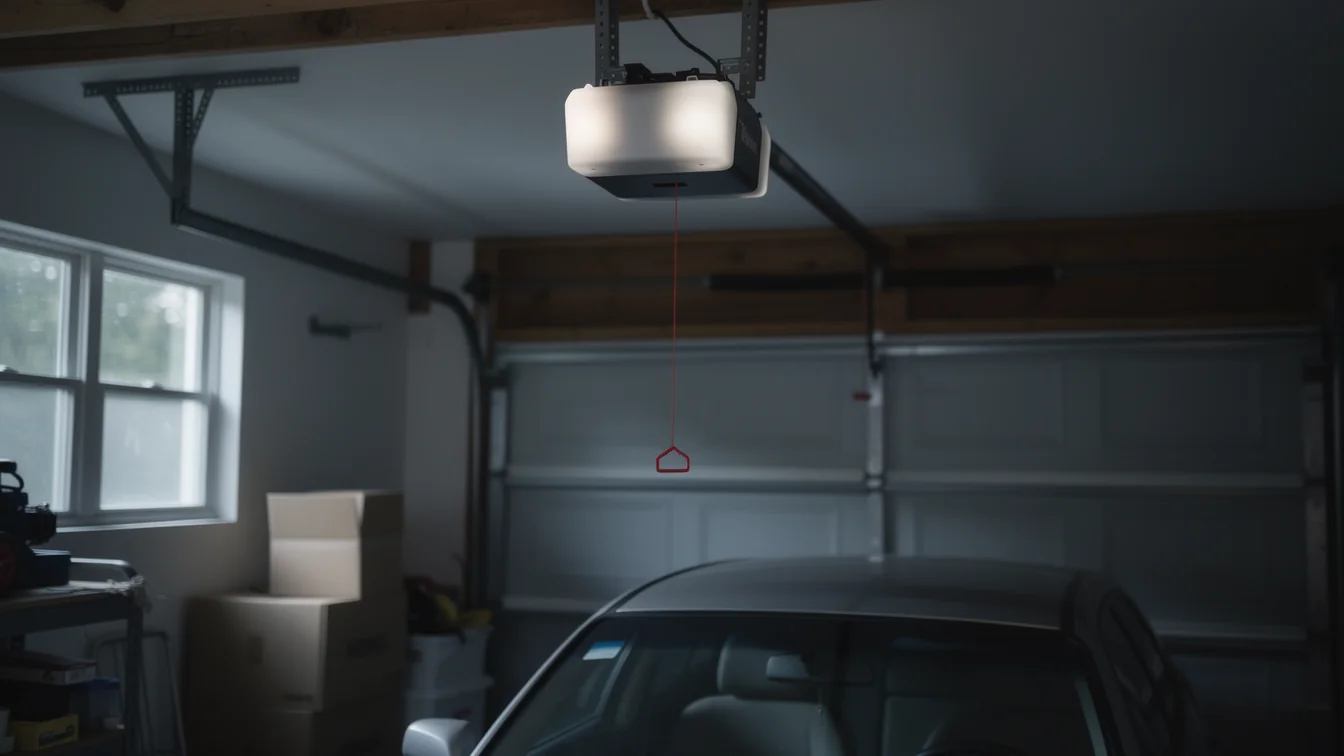
 What Openers and Power Cuts Really Mean for a Utica Garage Door
Why Utica's pre-1960 housing stock and cold winters make opener failures and power cuts different here, plus what actually drives repair cost in this service area.
BlogUtica, NY · 4 min read
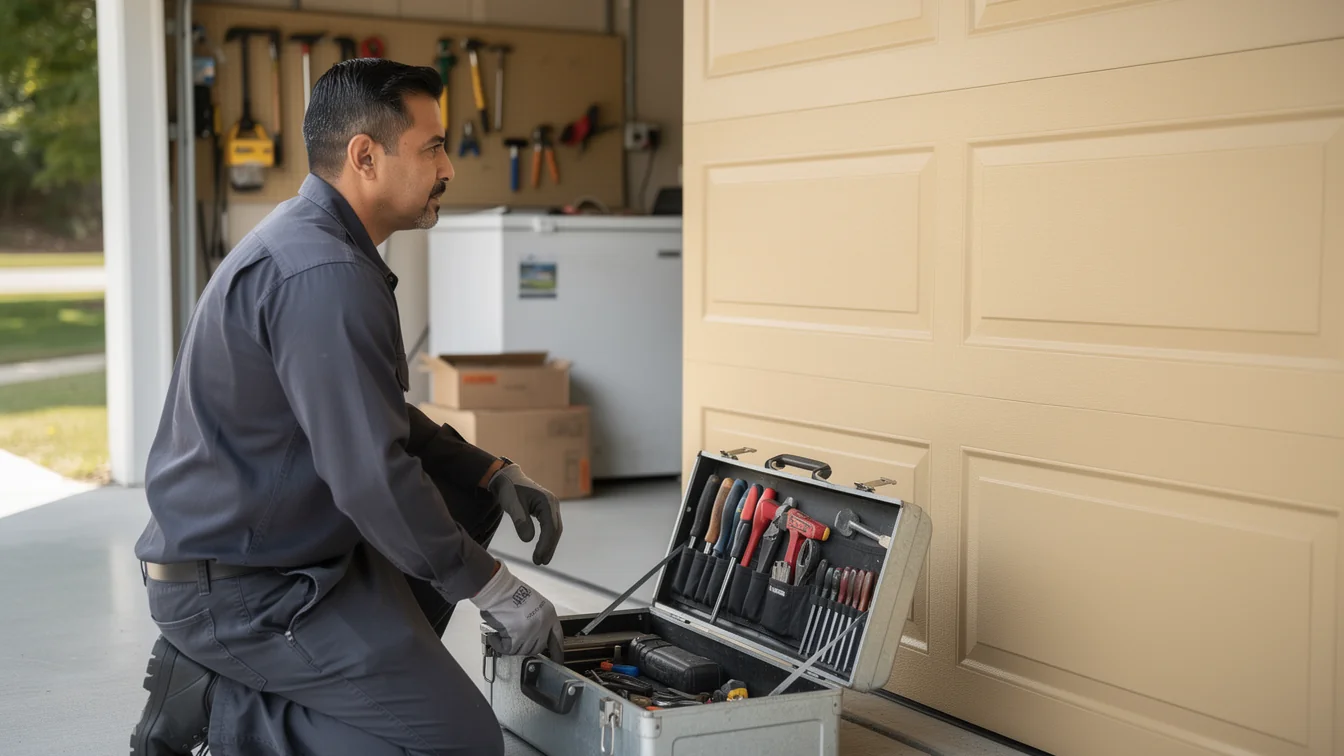
What Actually Happens When We Come Out to Your Door
A plain look at what a garage door service call checks in Utica, where most houses date to 1948 and winters run cold enough to stress springs and tracks.
Local detail
What It Costs
We're not going to list a number here, because what a call costs depends on what's wrong, and in this part of Utica that varies more than people expect. A lot of the housing stock in the service area went up between 1938 and 1989, with the median landing around 1948. That means the door, opener, and hardware on a given job might be original to the house or a retrofit from any decade since. A broken spring on a 1950s double door with side-mounted torsion hardware is a different job, with different parts, than the same break on a 1980s build with a standard extension system. Part availability is the real cost driver. Some of the older torsion hardware isn't something we carry on the truck for every call, and if a part has to be sourced, that adds a day, not an hour. We'll tell you on site which situation you're in before we touch anything, and we won't start work you haven't agreed to the scope of. If your door is old enough that repair parts are hard to find at all, we'll say so plainly rather than stretch a fix that won't hold.
The area
The Situation
Utica sits in a service area with roughly 54,294 households, of which about 24,296 are owner-occupied houses - call it under half, which tells you a good share of the calls we take are from landlords and property managers as much as homeowners. Median household income across the area is $68,425, which shapes a lot of the repair-versus-replace conversations we have; people here want the door fixed right, not gold-plated. The housing itself is old by national standards. Most of the 34 named areas we work in, from Yorkville and Marcy three miles out to Little Falls nineteen miles out, carry pre-1960 stock as the dominant type, not the exception. That matters for garage doors specifically because a door installed in 1955 was built to a spec, a track width, and a spring tension that nobody manufactures identically anymore. A service call out here is as much about figuring out what's actually installed as it is about fixing what's broken.
What we find
What to Look At First
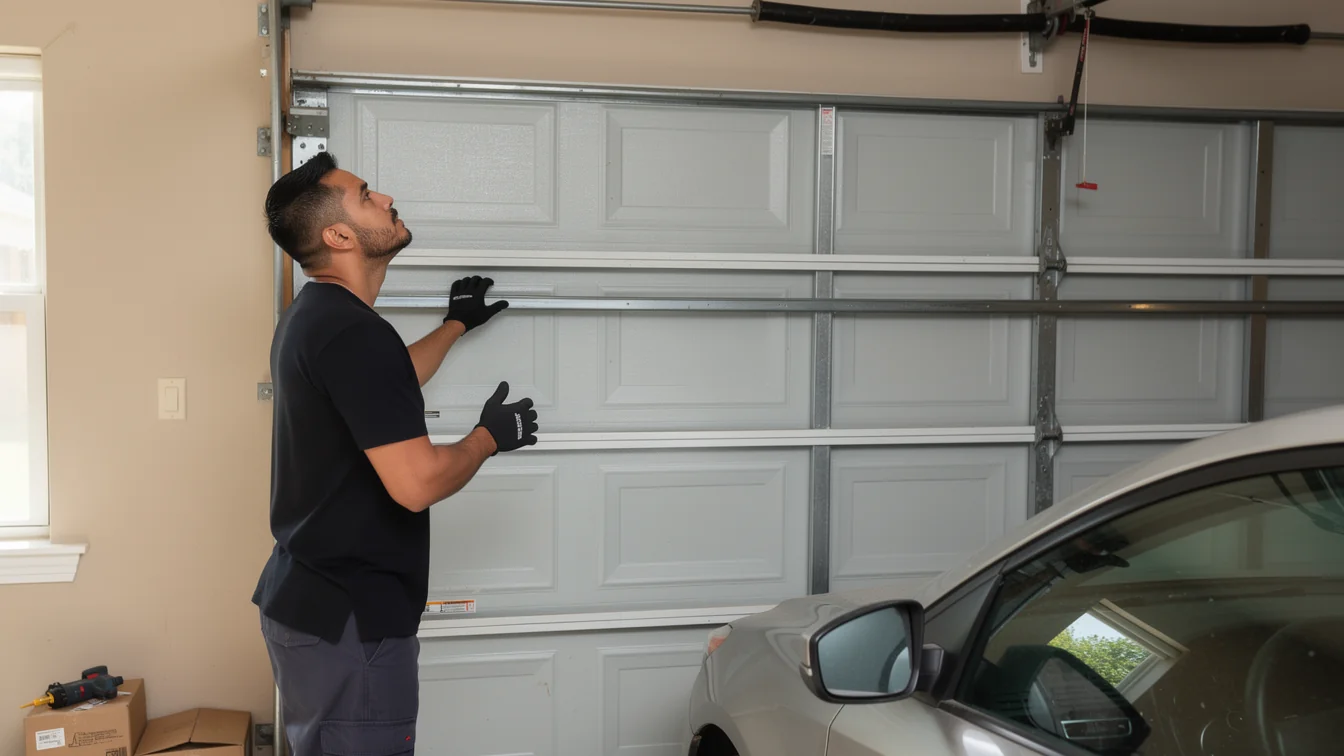
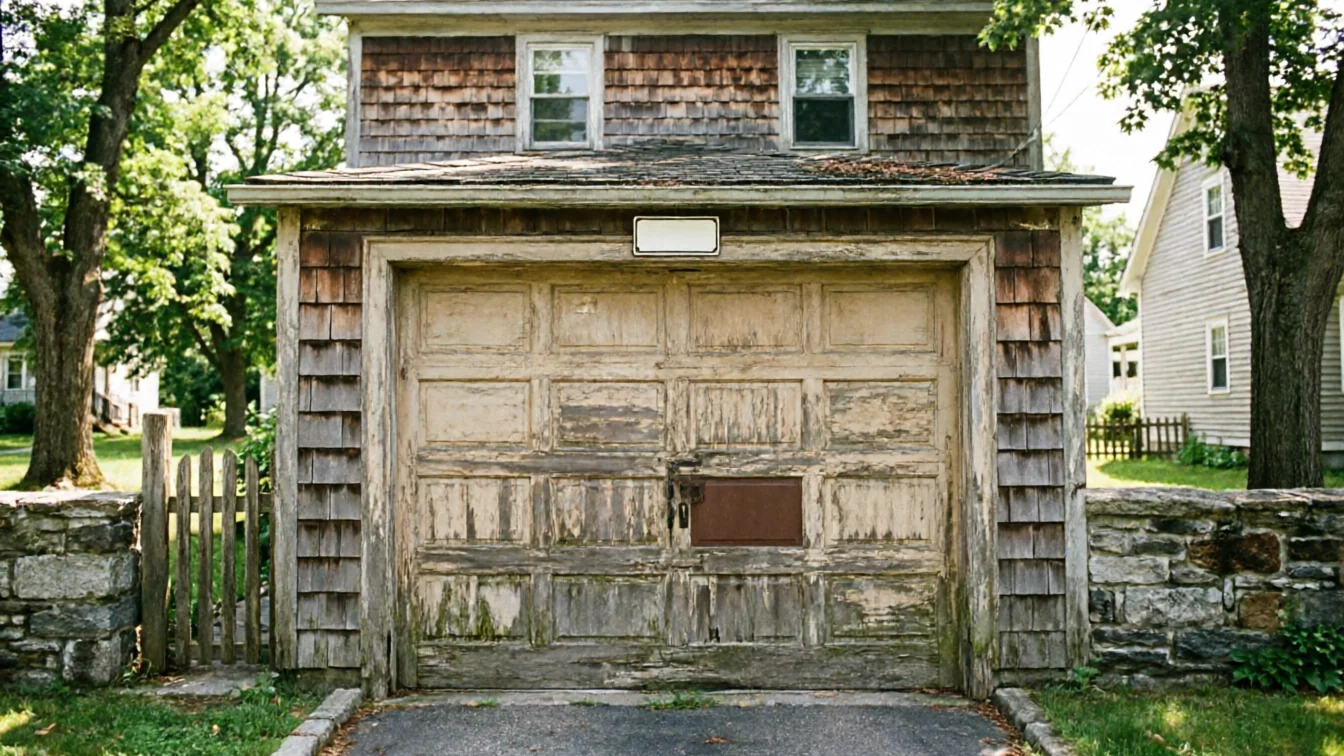
Before you call, walk out and look at three things. First, the springs - on a pre-1960 house, torsion springs are often side-mounted rather than center-mounted over the door, and that changes how a break behaves and what's safe to do yourself, which is nothing. Second, the track and rollers. Houses from the 1938-1989 build range often still run steel rollers on narrow track, and wear shows up as a door that shudders or drifts sideways rather than one that simply won't open. Third, the panels themselves. On the oldest doors in this area, a dented or rusted bottom panel usually can't be matched - the manufacturer either doesn't exist anymore or changed the panel profile decades ago, so a repair there sometimes becomes a full door swap whether you wanted it to or not. We check all three on every call regardless of what you phoned in about, because on a door this old, the complaint you noticed is rarely the only thing wrong.
How we work
What the Weather Here Does to It
This area sits in a severe cold climate band, and that does specific, predictable damage to garage door hardware over a winter. Steel springs lose temper faster in repeated freeze-thaw cycling, which is why spring failures cluster in the cold months here rather than spreading evenly across the year. Opener gear sets built with standard grease stiffen in sustained cold, which shows up as a motor that strains and clicks before it ever actually fails. On the older housing stock that dominates this service area, doors installed before insulation standards tightened also let more cold air sit directly on the hardware inside the garage, which speeds up all of the above. We see a seasonal pattern: a run of spring and cable calls as temperatures swing hardest in early winter and again at thaw, which is also when metal fatigued by cold finally gives out. None of this means replace everything before it breaks - most hardware out here is fine for years with basic lubrication - but it's why a door that's been quiet for a decade can fail in a single cold week.
Questions
Common questions
Will you know what parts fit my door without seeing it first?
Not reliably over the phone. A lot of houses in this area were built between 1938 and 1989, so hardware varies a lot even on the same street. We bring a range of common parts on the truck, but anything older or less common usually gets identified on site before we commit to a repair.
Is it worth fixing an old door instead of replacing it?
Often yes, especially if the track and opener are sound and it's just a spring or cable. We'll tell you straight if the panel or hardware is old enough that parts aren't realistically available, because at that point a repair won't hold and replacement is the honest answer.
Why do so many calls come in during cold spells?
The climate here is classed as severe cold, and that stresses spring steel and opener grease more than people expect. Hardware that's been fine for years can fail in a hard cold week, which is why winter is our busiest season for spring and cable calls.
Recommendation
You Might Also Like
More garage door guides for Utica homeowners.
What Openers and Power Cuts Really Mean for a Utica Garage Door
Why Utica's pre-1960 housing stock and cold winters make opener failures and power cuts different here, plus what actually drives repair cost in this service area.
 What That Noise Actually Means, Utica
Utica houses mostly date to 1938-1989.
 What's Worth Fixing on an Older Utica Garage Door
Utica's housing stock dates mostly to the late 1940s, so many garage doors are original.
Ready when you are
Need a garage door sorted in Utica?
Utica Garage Door Pros repairs and installs garage doors, springs and openers in Utica, NY and the surrounding area.
Certified Experts
Quality Assured